Waking the Cell’s Power Plant: Whole-Body PBM
Whole body PBM fertility support is getting more attention in reproductive wellness right now, and it is not hard to understand why.
Good nutrition. Supplements. Better sleep. Acupuncture. Herbal medicine.
When you have tried almost everything you can think of to prepare for pregnancy, and the result still does not come as quickly as you hoped, one question starts to feel very real.
“Is there anything I can do at the level of my cells?”
That is where whole-body PBM enters the conversation.
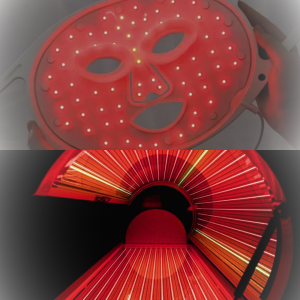
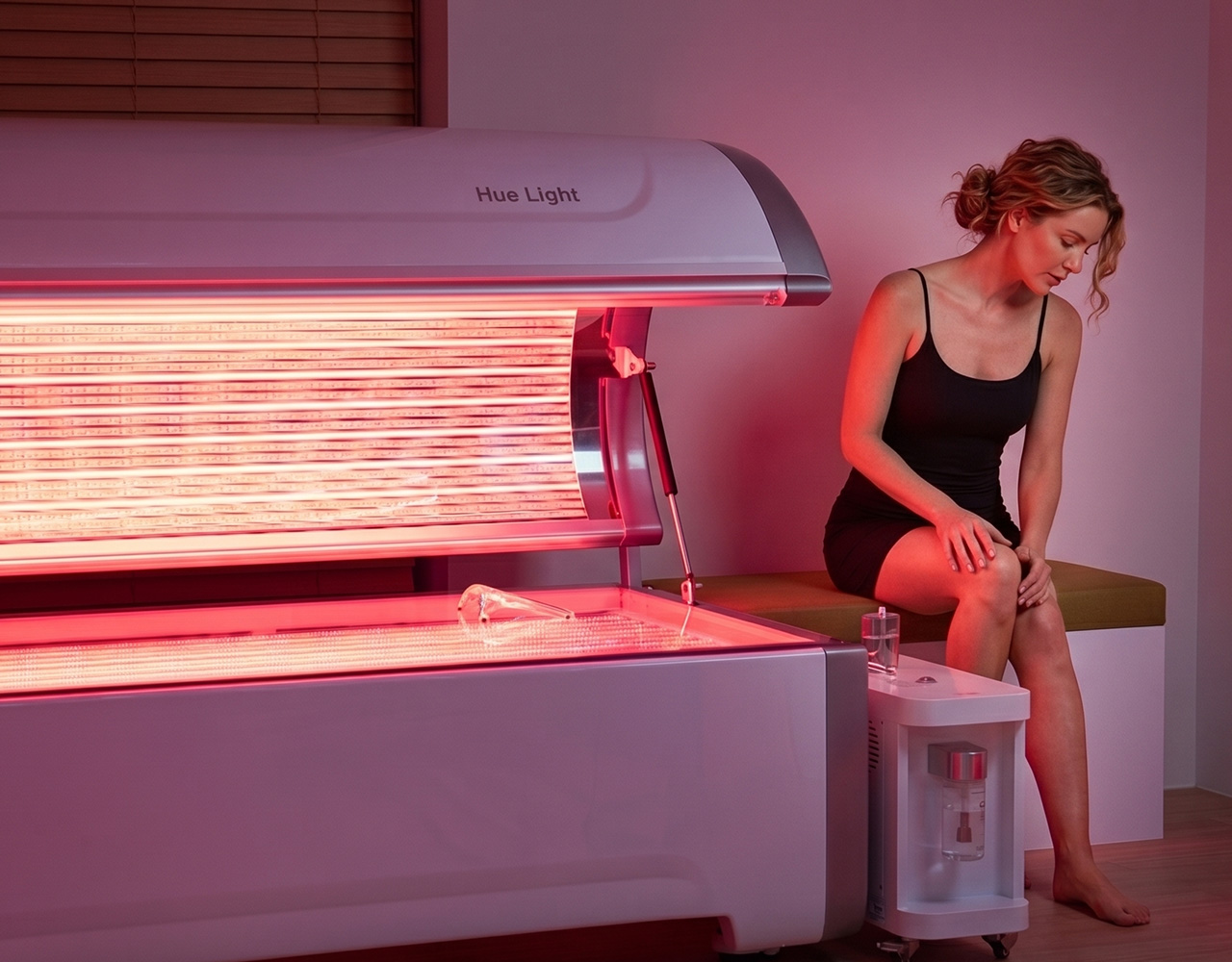
PBM, or photobiomodulation, is a light-based approach using red and near-infrared wavelengths. In fertility preparation, the interest is not about forcing the body to do something unnatural. It is about supporting the cellular environment that oocytes, ovaries, and the reproductive system depend on.
1. When Light Becomes a Signal Cells Can Understand
Most of us think of light in a simple way. Sunlight feels warm. Strong UV exposure can damage the skin. Bright light wakes us up. Soft light helps us settle down.
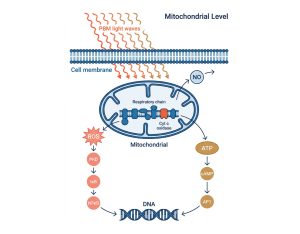
But certain wavelengths of light appear to do something more specific inside the body.
Red light and near-infrared light can interact with cells almost like a signal. This is the basis of PBM, which stands for photobiomodulation. In Korean, it is called 광생체조절.
The important point is that cells are not just passively exposed to this light. They contain structures that can respond to it.
Inside the mitochondria, there is an enzyme called cytochrome c oxidase, or CcO. This enzyme sits near the final step of the cellular energy production chain, where oxygen is used to help create ATP, the cell’s main fuel.
CcO also absorbs red and near-infrared wavelengths particularly well.
That is why PBM research often focuses on mitochondria, energy production, and cellular signaling. It is not simply “light shining on the body.” It is a specific wavelength interacting with a specific cellular system.
Another point matters here.
PBM is not heat therapy. It does not work by burning, warming, or damaging tissue. It works through a non-thermal mechanism, meaning the goal is biochemical signaling rather than temperature change.
2. Restarting a Stalled Engine: How Whole-Body PBM Works
So what actually happens after the light reaches the cell?
The mechanism is often explained in three stages.
Stage 1: Light is absorbed. Red and near-infrared wavelengths penetrate the skin and are absorbed by CcO in the mitochondria.
Stage 2: The brake is released. When cells are fatigued, inflamed, or under oxidative stress, a molecule called nitric oxide (NO) binds to CcO and blocks the enzyme from working. When light reaches CcO, it displaces the NO, and the blocked energy production system begins running again. The result is an increase in ATP.
Stage 3: The effect spreads. The displaced NO now acts as a vasodilator, widening blood vessels and improving circulation. At the same time, the light signal dampens inflammatory and oxidative stress pathways, and activates genes involved in cellular repair.
One of the most interesting points in PBM research is that tired or underperforming cells may respond more noticeably than cells that are already functioning well.
In other words, PBM does not “inject” energy into the body.
It gives the cell a signal that may help it produce energy on its own again.
3. Why Whole-Body PBM Matters for Fertility Preparation
The ovaries and uterus are among the most energy-demanding tissues in the body. Fertilization, implantation, and early embryo development all require a high level of cellular coordination and energy. This is why mitochondrial function has become such an important topic in reproductive health.
Oocyte quality, in particular, is now understood to be more decisive than oocyte count in determining IVF outcomes. A single oocyte contains approximately 600,000 mitochondria. A typical body cell may contain around 2,000.
This is where whole body PBM fertility support becomes relevant.
PBM’s main areas of interest, including cellular energy, circulation, oxidative stress, and tissue recovery, overlap with the same conditions the reproductive system depends on.
Key Advantages of Whole-Body PBM Fertility Support
- Non-invasive- There are no needles and no incisions.
- Drug-free- Nothing is swallowed or injected, which means there is no added pharmacological burden.
- Non-hormonal- PBM does not artificially introduce or manipulate reproductive hormones.
- Selective response- Cells under stress or fatigue may respond more strongly, while healthy cells appear to show a more limited response.

Still, one point needs to be very clear.
Whole-body PBM is not a replacement for IVF, fertility medication, reproductive procedures, or medical care.
It is better understood as a preparation and recovery-support approach. It may be considered before a fertility cycle, or between attempts after repeated failure, as a way to support the cellular environment before the next step.
What the Research Says So Far
The evidence in fertility-related PBM is still developing.
At this stage, the fertility field includes smaller case series, clinic-level observational data, and early-stage human research. Large-scale randomized controlled trials are still needed.
In 2024, a UK research team published a prospective case series looking at multi-wavelength PBM in women who had experienced repeated fertility failure. The findings were encouraging, but it is important to note that this was early-stage evidence and did not include a control group.
That is the balanced view.
Whole-body PBM is not yet a validated standard fertility treatment.
But it does have a well-described mechanism, a strong safety profile, and a growing body of research interest behind it.
For people considering whole body PBM fertility support, the main point is not that light can guarantee an outcome. It cannot.
The point is that fertility preparation may need to include the cellular environment, not only hormones, egg count, or cycle timing.
In Closing
The longer the wait, the more you start to feel that there must be something else you can do.
Whole-body PBM offers one possible answer to that feeling.
It is a way of using light to support the cell’s own energy system, from the inside out.
If you are preparing for another fertility attempt, speak with your physician or reproductive medicine specialist about which preparation methods make sense for your situation.
The effort you are putting in quietly, carefully, and one step at a time is not wasted.
This content is not intended to replace medical treatment. Fertility care should always be undertaken under the guidance of a qualified obstetrician or reproductive medicine specialist.
This content is not intended to replace medical treatment. Fertility care should always be undertaken under the guidance of a qualified obstetrician or reproductive medicine specialist.
📌 References
- Hamblin MR. Mechanisms and mitochondrial redox signaling in photobiomodulation. Photochem Photobiol. 2018. PMC5523874
- Passarella S & Karu T. Absorption of monochromatic and narrow band radiation in the visible and near IR by both mitochondrial and non-mitochondrial photoacceptors. J Photochem Photobiol B. 2014. PMC8971717
- Phypers C, et al. Efficacy of multiwavelength PBM in enhancing female fertility outcomes. J Clin Med. 2024;13(23):7101. PMC11642705
- Ongoing clinical trial: ClinicalTrials.gov NCT07311928