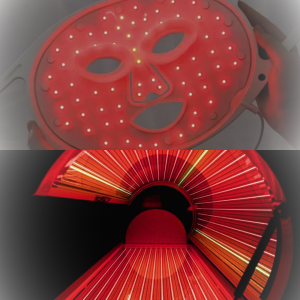

HBOT for fertility, also known as hyperbaric oxygen therapy, is quietly becoming one of the most discussed adjuncts in reproductive medicine.
The reason is not hype. It comes back to one question many couples eventually ask after repeated IVF failure or unexplained infertility:
What if the issue is not only the number of eggs, but the cellular environment those eggs are developing in?
A Review of the Latest Clinical Evidence

In South Korea, more than 250,000 couples are currently experiencing infertility, roughly one in seven. The country’s low birth rate has long been a topic of national conversation, but behind that headline is a quieter story: couples who want to have children but cannot.
What makes this particularly striking is not the numbers alone, but the nature of the problem.
Many of these couples have had every test available and come back with normal results. They’ve gone through round after round of IVF, only to face implantation failure each time. Their doctors, too, are often at a loss to explain why. This is what’s known as unexplained infertility, and it accounts for a significant share of cases.
So what is actually going wrong?
The Issue Is Not Only Egg Quantity. It Is Egg Quality.
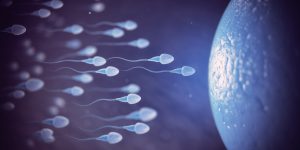
Reproductive scientists have been increasingly converging on one concept: cellular energy, specifically, the function of mitochondria within the egg cell.
A typical cell in the human body contains around 2,000 mitochondria. A single egg cell, by contrast, holds approximately 600,000. The reason is straightforward: fertilization, implantation, and early embryo development are among the most energy-intensive biological processes in the human body. When the mitochondria aren’t functioning well, regardless of how many eggs are available, pregnancy becomes difficult to achieve.
As we age, or as oxidative stress accumulates, mitochondrial function declines. The growing consensus in reproductive medicine is that egg quality, not egg quantity, is the more decisive variable in pregnancy outcomes.
There is also an important timing consideration. It takes roughly 90 days for an egg to fully mature. The condition of the egg at retrieval reflects the cellular environment of the preceding three months. This means that what happens in the preparation period before a cycle, not just the cycle itself, already shapes the outcome.
Why HBOT and PBM Work Better Together
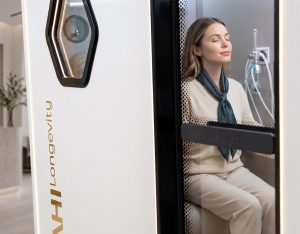
Two approaches have been attracting attention in reproductive medicine clinics across the UK, Scandinavia, and China: Hyperbaric Oxygen Therapy (HBOT) and Photobiomodulation (PBM). Each has its own evidence base, but the reason they are increasingly used together comes down to a simple principle — their mechanisms are different, which means they address different parts of the problem.
PBM uses specific wavelengths of red and near-infrared light to directly stimulate mitochondria within cells, increasing ATP (cellular energy) production. In plain terms, it raises the output of the cell’s power plant. HBOT for fertility, on the other hand, delivers oxygen under increased atmospheric pressure, allowing oxygen to dissolve directly into blood plasma, bypass the limitations of red blood cell transport, and reach tissues with compromised circulation, including the ovaries and endometrium. It supplies the fuel that the power plant needs to run.
This is why HBOT for fertility is being discussed not as a standalone shortcut, but as part of a broader preparation strategy for the ovaries, endometrium, and cellular environment.
When both mechanisms operate together, the cellular environment of the ovaries and uterus can be improved more comprehensively than either approach alone. The Laser Medicine Centre in London and a number of other reproductive clinics have begun integrating both into their protocols for this reason.
What the Evidence Shows So Far for HBOT for Fertility and PBM

This is not a matter of speculation. Clinical data supporting both approaches has been accumulating steadily.
On the PBM side, the most widely cited dataset comes from Japan. In a study by Ohshiro and colleagues, 701 women (average age 39.4) who had failed all other fertility treatments were treated with PBM. Of these, 22.3% achieved pregnancy, with half being natural conceptions, without assisted reproductive technology. Many of these women had been trying for more than nine years.
Data from Scandinavian clinics adds further weight. An aggregated dataset from Danish and Norwegian clinics, which have used PBM as a fertility adjunct since 2012, showed a pregnancy rate of approximately 65% among 400 women (Grinsted et al., 2019).
In 2024, a prospective case series from a research team at University College London (Phypers et al., Journal of Clinical Medicine, 2024) documented outcomes in women with complex fertility histories, including recurrent miscarriage, failed implantation, and prolonged unexplained infertility. Every case in the series resulted in pregnancy and live birth. Among them was a 43-year-old woman who delivered at full term without complications. The authors have proposed this field of application as an emerging discipline they call Reproductive Photomedicine.
→ Full paper: Phypers et al. 2024, PMC
The current research on HBOT for fertility is still developing, but the recent focus on ovarian response, endometrial thickness, and sperm parameters explains why reproductive clinics are paying closer attention.
For HBOT, the most relevant recent data comes from 2025. A prospective cohort study at Beijing Chaoyang Hospital’s Centre for Reproductive Medicine enrolled patients who had repeatedly shown poor ovarian response to IVF stimulation. Following HBOT, both the number of eggs retrieved and the number of viable embryos increased in a statistically significant manner.
In a separate cohort, patients with a persistently thin endometrium, a condition that had repeatedly caused embryo transfer cancellations, showed measurable improvement in endometrial thickness and receptivity following HBOT.
→ Full paper (poor ovarian response): Lu Q. et al., Reprod Biol Endocrinol, 2025
→ Full paper (thin endometrium): PMC10472734
Male factor infertility has also been addressed. A 2025 meta-analysis published in Medical Gas Research pooled data from nine randomized controlled trials and found that HBOT produced statistically significant improvements across all key sperm parameters, motility, density, morphology, survival rate, along with higher clinical pregnancy rates.
→ Full paper: Liu B. et al., Med Gas Res, 2025
Not a Replacement, but a Better Foundation for Treatment
One point needs to be stated clearly. Neither HBOT nor PBM is a substitute for IVF or any other reproductive medical treatment. They are adjunctive approaches, used to optimize the cellular environment before a cycle, or to support recovery between attempts after repeated failure.
A large-scale randomized controlled trial is currently underway to validate PBM as an IVF adjunct (ClinicalTrials.gov: NCT07311928). The science is ongoing.
What the available data does consistently show, however, is a strong safety profile. Both approaches are non-invasive, drug-free, and do not interfere with the hormonal system. Across clinical studies, they have been consistently described as well-tolerated, with minimal adverse effects reported.
For couples asking, “What can we do differently this time?” HBOT and PBM are among the more actively studied supportive options being discussed alongside conventional fertility care.
For readers interested in light-based fertility preparation, Hue Light’s whole-body PBM fertility support explores how red and near-infrared wavelengths are being studied in relation to cellular energy, circulation, and reproductive wellness.
The BAHI Longevity reproductive wellness approach looks beyond one marker and considers circulation, oxidative balance, hormone rhythm, and immunity as part of the body’s wider preparation environment.
This content is not intended to replace medical advice or treatment. Fertility treatment should always be undertaken under the guidance of a qualified obstetrician or reproductive medicine specialist.
📌 References
- Liu B, et al. Hyperbaric oxygen therapy for male infertility: a systematic review and meta-analysis. Med Gas Res. 2025;15(4):529–534.
- Phypers C, et al. Multiwavelength photobiomodulation in enhancing female fertility outcomes. J Clin Med. 2024;13(23):7101.
- Phypers C & Hanna R. Photobiomodulation in complex female infertility: a case report. 2025.
- Lu Q, et al. Hyperbaric oxygen therapy improves oocyte yield and embryo quality in poor ovarian responders. Reprod Biol Endocrinol. 2025.
- Chen J, et al. Hyperbaric oxygen therapy for resistant thin endometrium during FET. Reprod Biol Endocrinol. 2023. PMC10472734.
- Grinsted J, et al. PBM in assisted reproduction. 2019.
- Ohshiro T, et al. Low reactive-level laser therapy for infertility (n=701). 2012. PMID: 22747309.