A New Paradigm in Osteoporosis Management: The Science of Micro-Stimulation That Can Replace Exercise
Vibration therapy for bones is becoming a safer and science-backed alternative to traditional exercise for people worried about osteoporosis. On the dining tables of many middle-aged women, one thing is never missing: a handful of supplements. Facing the fear of osteoporosis that appears with menopause, countless women dutifully take calcium, vitamin D, magnesium, and even osteoporosis medications prescribed by their doctors, almost like homework. But even as they do everything “right,” bone density continues to decline. This is exactly why more experts are now exploring whole-body vibration therapy for bones as a practical and low-impact solution.
There is a desperate belief: “I have to take these or my bones will break.” But the statistics remain harsh. One out of three women over the age of 50 experiences an osteoporotic fracture. Hip fractures are especially dangerous, with a one-year mortality rate of nearly 20%; they are deadlier than many cancers.
So even with medication and calcium, why do bones continue to weaken?
Why Menopause Accelerates Bone Loss (And Why Supplements Aren’t Enough)
The problem lies not in the materials but in the stimulation. Once menopause removes the protective shield of estrogen, bones begin to deteriorate rapidly. No matter how much high-quality “cement” (calcium) you pour in, bones cannot become strong without the mechanical stimulation that compacts and reinforces them.
Why Traditional Exercise Isn’t Always Safe for Osteoporosis
Modern medicine has long relied on medication and exercise. But for patients whose bones are already weakened, high-intensity exercise, the very activity that could strengthen bones, carries a real risk of fractures.
For osteoporosis patients, exercises like weight training or jumping can trigger spinal compression or joint injury, making them risky and often impossible to perform. This dilemma is where whole-body vibration therapy for bones emerges as a promising alternative that goes beyond medication and strenuous exercise.
How Micro-Vibrations Strengthen Bones Without High-Impact Exercise
For bones to become stronger, they must receive mechanical load physical force applied to the bone. Bone cells only send the signal to increase bone density when they are pressed, strained, or mechanically stimulated. But here lies the irony: The very high-intensity weight training or jumping movements that provide this stimulation can be dangerous for people who already have weakened bones. For osteoporosis patients, such exercises may trigger spinal compression or joint injury, making them risky and often impossible to perform.
The key to resolving this exercise paradox lies in vertical vibrations that counteract gravity. Whole-body vibration therapy delivers strong mechanical stimulation to bones and muscles through rapid vibrations more than 30 times per second without placing excessive load on the joints. Research shows that vibration therapy for bone density can provide measurable improvements without high-impact exercise. This sends signals to the brain and bone cells similar to the stimulation bones receive during jumping or running, yet with minimal actual impact on the joints.
In other words, it provides the benefits of high-impact exercise without the risk, making it a groundbreaking alternative for osteoporosis patients. This is a safe form of low-intensity vibration for bones.
Clinically Proven Improvements in Bone Density (0.93% Increase Study)
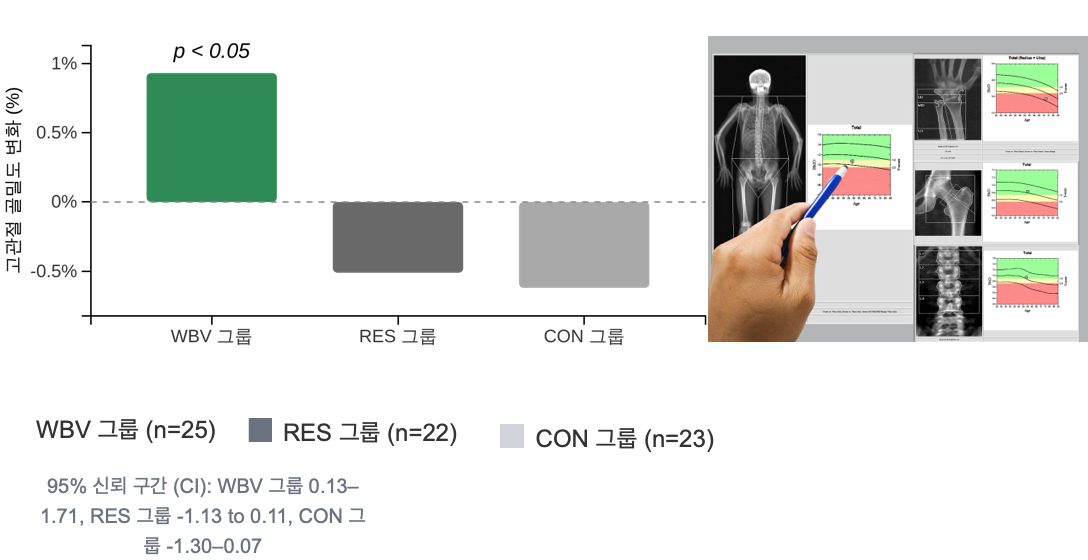
A research team from KU Leuven in Belgium provided important clinical evidence supporting this theory in a study published in the Journal of Bone and Mineral Research. The team conducted a six-month follow-up on 70 postmenopausal women. Participants were divided into three groups: a vibration-platform group that maintained a squat position on the device, a resistance-training group using gym equipment, and a control group that did no exercise.
The results after six months drew significant attention from the academic community. When the researchers analyzed hip bone density, they found that even the group performing resistance exercises at the gym showed a slight decrease in bone density. In contrast, the vibration-exercise group was the only group that recorded an increase of 0.93% in bone density.
This improvement is comparable to what is typically expected after six months of taking standard osteoporosis medications. The study scientifically demonstrated that without lifting heavy equipment or sweating through strenuous workouts, precisely controlled vibration therapy for bone health alone can activate the body’s bone-regeneration system.
How Vibration Therapy Improves Muscle Strength, Balance, and Fall Prevention

The ultimate goal of osteoporosis management is not merely increasing bone density, but preventing actual fractures. Considering that more than 90% of fractures in older adults are caused by falls, balance and muscle strength are just as important as bone strength. This is precisely where whole-body vibration therapy for bones demonstrates exceptional preventive benefits.
According to the study, the group that received vibration therapy for bones showed about a 16% increase in quadriceps muscle strength. Most importantly, postural control improved by up to 40%, helping reduce fall risk by enhancing neuromuscular activation, stability, and overall balance, based on clinical studies.
As participants tried to maintain balance on the vibrating platform for bones, the neural circuits connecting the brain and muscles were activated, and the small deep muscles that are normally underused were strengthened. This leads to real-world fall-prevention capability by helping the body maintain balance and avoid slipping during sudden or unexpected movements. Another crucial point is safety: not a single adverse effect was reported during the study period, making this an important indicator of its safety for elderly patients.
The Cellular Principles Behind Vibration Therapy or Bone Density
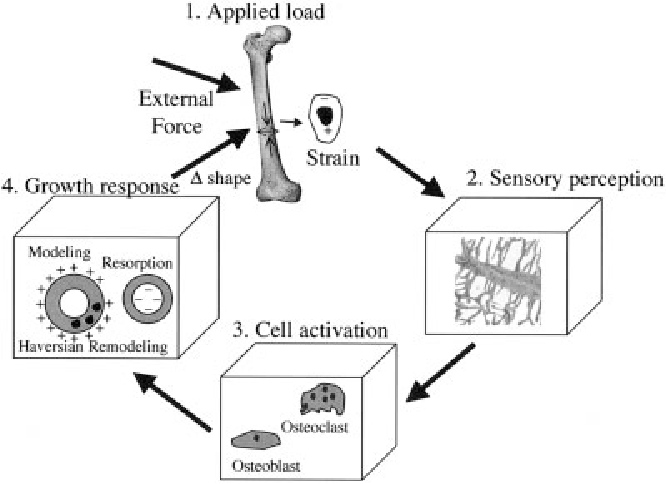
The mechanism by which vibration therapy for bone density strengthens bones can be explained through Wolff’s Law, which states that bone adapts and becomes stronger in response to the mechanical loads placed upon it. The rhythmic vertical waves generated by a vibration plate for bone are perceived by bone cells as continuous changes in gravitational acceleration.
This micro-vibration energy stimulates osteoblasts, promoting bone formation, while also enhancing the circulation of fluids within the bone marrow, improving nutrient delivery to the bone. It is essentially a scientific recreation of a natural principle, just as a tree sways in the wind and responds by growing deeper, stronger roots. Low-intensity Vibration helps bones strengthen themselves from within.
Beyond Supplements: How Vibration Therapy Strengthens Your Bones
Many menopausal women search endlessly for medications and supplements that promise better bone health. But it is important to remember that calcium pills and osteoporosis drugs are merely the “bricks and cement” used to build bone. No matter how high-quality the materials are, you cannot build a strong house without workers to assemble them.
And the “worker” in this process is mechanical stimulation (vibration). If medication is a chemical approach, whole-body vibration therapy for bones is a biomechanical approach that awakens the bone’s natural instincts. For middle-aged and older adults whose joints are weak and who fear exercise, scientifically validated low-intensity vibration for bones offers a safe and efficient alternative, moving beyond passive pill-taking toward fundamentally transforming their bodies.
Instead of finding comfort in the bottles of pills on your dining table, consider giving your bones what they truly need: healthy, healing vibration.
Benefits of Whole-Body Vibration Therapy at a Glance
- Bone density improvement: Up to 0.93% increase in hip bone density in six months
- Muscle strength: Quadriceps strength improved by 16%
- Balance and stability: Improves postural control by up to 40% and reduces fall risk by enhancing neuromuscular activation and stability
- Low-impact and safe: Minimal stress on joints, no reported adverse effects
- Convenient and accessible: Can be done at home with the right vibration plate for bones
Why Whole-Body Vibration Therapy Is Essential for Stronger Bones
For middle-aged and older adults, calcium supplements alone are not enough. To truly strengthen bones and reduce the risk of fractures, mechanical stimulation is essential. Whole-body vibration therapy provides a safe, clinically proven, and low-impact way to increase bone density, enhance muscle strength, improve balance, and support overall bone health.
By incorporating vibration therapy for bone health into your routine, you can move beyond passive pill-taking and give your bones the stimulation they truly need, promoting stronger, healthier, and more resilient bones as you age.
Protect Your Bones: Try Safe Vibration Therapy for Bone Health Today
Talk to your healthcare provider about safe whole-body vibration therapy options and discover devices specifically designed to strengthen bones, improve balance, and reduce fracture risk.