
Hydrogen inhalation therapy is gaining attention because molecular hydrogen appears to act differently from conventional antioxidants.
Instead of broadly suppressing all reactive oxygen species, hydrogen has been studied for its ability to selectively reduce highly cytotoxic radicals while leaving many normal cellular signaling pathways intact.
Hydrogen Inhalation Therapy and the 2007 Nature Medicine Shift
What is the primary driver of aging and disease in the human body?
Modern medicine has long sought the answer in reactive oxygen species (ROS). With every breath and every digestive cycle, the body generates a continuous stream of free radicals. When these accumulate in excess, they damage cellular DNA, destroy mitochondria — the energy-producing organelles of the cell — and ultimately accelerate chronic disease and aging: cancer, dementia, diabetes, cardiovascular conditions.
For decades, the medical and nutritional sciences devoted enormous effort to finding ways to neutralize these free radicals. Vitamin C, vitamin E, coenzyme Q10 — a proliferation of antioxidants entered the market, from affordable supplements to expensive intravenous infusion therapies.
Then, in May 2007, a research team led by Professor Ohta Shigeo of Nippon Medical School published a paper in Nature Medicine — one of the world’s highest-impact scientific journals — and overturned every established assumption.
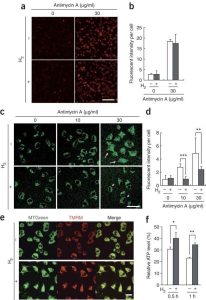
The protagonist was, of all things, hydrogen (H₂). The lightest and most abundant element in the universe, long regarded as a biologically inert gas with no meaningful activity in the human body. Professor Ohta’s team demonstrated for the first time that molecular hydrogen selectively eliminates only the most toxic free radicals that destroy cells — establishing it as the most ideal antioxidant known to exist.
“Hydrogen leaves intact the reactive oxygen species essential to immune function and cellular signaling, and selectively neutralizes only the most cytotoxic species — the hydroxyl radical (•OH). This represents a new horizon in preventive and therapeutic medicine.”
— Ohsawa I, et al. Nature Medicine 2007;13(6):688–694

pathway diagram showing ischemia-reperfusion → Superoxide → •OH → H₂O conversion
How Does Hydrogen Differ from Conventional Antioxidants?
The natural follow-up question: “Conventional antioxidants also eliminate free radicals — what makes hydrogen more special?”
The difference comes down to two properties: selectivity and penetration.
Selective Antioxidation: Distinguishing Helpful Signals from Harmful Radicals
Not all reactive oxygen species in the body are harmful. Hydrogen peroxide (H₂O₂) and nitric oxide (NO), for example, are essential for immune cells to eliminate pathogens, and for cell-to-cell signaling. Indiscriminately eliminating all ROS creates a paradox: immune function collapses. This is precisely why research has shown that long-term high-dose antioxidant supplementation can actually be harmful.
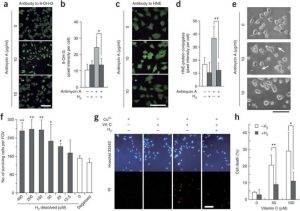
Hydrogen is different. It reacts exclusively with the most cytotoxic species — the hydroxyl radical (•OH) and peroxynitrite (ONOO⁻) — which directly destroy cellular DNA and mitochondria. Once hydrogen neutralizes these toxic species, the product is simply water (H₂O), eliminated harmlessly through urine and perspiration. Protecting what the body needs, eliminating precisely what it doesn’t.
Blood-Brain Barrier Penetration and Neuroprotection
Hydrogen’s second advantage is its size. With a molecular weight of just 2, hydrogen is a neutral molecule — neither lipophilic nor hydrophilic — enabling it to pass freely through the blood-brain barrier (BBB), which most drugs and nutritional compounds cannot cross. It passes through the cell membrane and reaches the inner mitochondrial membrane, accessing the deepest architecture of the cell.

— Hydrogen selective antioxidation and BBB penetration pathway
5 Clinically Studied Effects of Hydrogen Inhalation Therapy
1. Neuroprotection and Cognitive Defense
The brain is the body’s highest oxygen consumer — and consequently, the organ most vulnerable to ROS-mediated damage. Neurodegenerative diseases including Alzheimer’s, Parkinson’s, and stroke share a common pathophysiological root: severe oxidative stress.
Upon inhalation, hydrogen enters systemic circulation, crosses the blood-brain barrier, and reaches the cerebral cortex and hippocampus — the seat of memory. In clinical and preclinical studies involving Parkinson’s disease models and patients with early-stage cognitive decline, hydrogen inhalation demonstrated inhibition of neuronal apoptosis, significant reduction in oxidative stress biomarkers, and defense against cognitive deterioration.
📚 Ohta S. Pharmacol Ther. 2014;144(1):1–11. 🔗 PubMed
2. Inflammation Regulation and Cytokine Balance
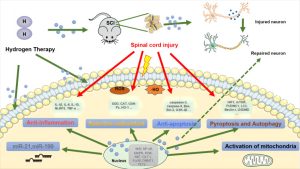
Beyond free radical scavenging, hydrogen regulates gene expression at the cellular level. It stabilizes macrophages — central mediators of immune response — and suppresses the explosive overproduction of pro-inflammatory cytokines (TNF-α, IL-6, and others) that drive pathological inflammation.
This mechanism is particularly significant in conditions where immune dysregulation sustains chronic inflammation — rheumatoid arthritis, autoimmune disease — and in acute respiratory infections where pulmonary inflammation management is critical. China’s National Health Commission incorporated hydrogen inhalation into its COVID-19 treatment guidance.
📚 Itoh T, et al. Biochem Biophys Res Commun. 2009;389(4):651–656. 🔗 PubMed
3. Ischemia-Reperfusion Injury Protection
Imagine the moment after cardiac arrest, when blood flow restarts. Oxygen floods in, triggering an immediate massive surge of hydroxyl radicals that rapidly devastate cardiac and brain cells. This paradox — damage beginning at the very moment of rescue — is ischemia-reperfusion injury.
Japan’s Ministry of Health, Labour and Welfare formally approved hydrogen inhalation as an Advanced Medical Treatment (Category B) for post-cardiac arrest resuscitation patients. In the large-scale HYBRID II clinical trial, patients receiving hydrogen inhalation following cardiopulmonary resuscitation demonstrated significantly reduced brain injury and higher rates of complete neurological recovery at 90 days.
📚 Tamura T, et al. eClinicalMedicine. 2020;27:100540. 🔗 Full text
4. Mitochondrial Protection and Energy Recovery
Mitochondria are the cell’s power plants — converting oxygen into ATP, the energy currency of all biological function. But every cycle of energy production generates oxidative byproducts — “exhaust fumes” that progressively damage the machinery itself. As we age and accumulate fatigue, this deterioration deepens: chronic fatigue, metabolic slowdown, lipid accumulation all trace to this process.
Hydrogen penetrates the inner mitochondrial membrane, neutralizing toxic ROS precisely where they are generated. Protected mitochondria resume normal ATP synthesis. In animal model research, hydrogen was shown to promote hepatic secretion of FGF21 — activating energy metabolism and ameliorating metabolic dysfunction associated with obesity and diabetes.
📚 Kamimura N, et al. Obesity. 2011;19(7):1396–1403. 🔗 PubMed
5. Cancer Treatment Side-Effect Support and Quality of Life
Chemotherapy and radiation therapy attack cancer cells — but simultaneously impose severe oxidative stress on healthy tissue. Nausea, profound fatigue, hair loss, and skin damage are realities that disrupt daily life throughout treatment.
According to clinical research, patients who combined hydrogen inhalation with radiation therapy maintained significantly reduced fatigue and side-effect burden throughout the treatment course, without compromising therapeutic efficacy. For patients fighting their disease while simultaneously trying to preserve their quality of life, hydrogen inhalation has become a pragmatic clinical option.
📚 Kang KM, et al. Med Gas Res. 2011;1(1):11. 🔗 Full text
Why Hydrogen Inhalation Instead of Hydrogen Water?
A frequently asked question: “Can I just drink hydrogen-rich water instead?” Hydrogen water does have documented benefits. But the physics impose a hard limit: water can dissolve a maximum of approximately 1.6 ppm of hydrogen. Beyond that saturation point, hydrogen simply escapes.
A hydrogen inhalation device delivers high-purity hydrogen gas directly into the bloodstream via the lungs. Systemic hydrogen delivery increases dramatically, and absorption is far more rapid. Any excess hydrogen not utilized is exhaled naturally — there is no risk of accumulation or toxicity. This combination of safety and bioavailability is precisely why leading longevity centers worldwide have adopted hydrogen inhalation systems as core therapeutic equipment.
When Every Breath Becomes Recovery
The lightest element in existence, quietly and precisely eliminating the most lethal drivers of aging and disease.
Hydrogen inhalation does not force a chemical reaction upon cells or stimulate them artificially. It simply prevents toxic species from consuming cellular integrity — and in doing so, allows cells to reclaim their inherent capacity for healing and energy production. It is, at its most fundamental, a purification of the cellular environment.
The act of breathing itself — the most essential thing a living body does — can become the most powerful time for recovery.
👉 Explore the Hue Light Premium Hydrogen Inhalation System
Disclaimer: The scientific literature cited on this site is provided for educational purposes only and does not constitute medical advice, diagnosis, or treatment. Consult a qualified healthcare professional before beginning any therapeutic protocol.
References
- Ohsawa I, et al. Hydrogen acts as a therapeutic antioxidant by selectively reducing cytotoxic oxygen radicals. Nat Med. 2007;13(6):688–694.
- Ohta S. Molecular hydrogen as a preventive and therapeutic medical gas: initiation, development and potential of hydrogen medicine. Pharmacol Ther. 2014;144(1):1–11.
- Itoh T, et al. Molecular hydrogen suppresses FcεRI-mediated signal transduction and prevents degranulation of mast cells. Biochem Biophys Res Commun. 2009;389(4):651–656.
- Tamura T, et al. Efficacy and safety of inhaled hydrogen gas for post-cardiac arrest syndrome — a randomized controlled clinical trial (HYBRID II). eClinicalMedicine. 2020;27:100540.
- Kamimura N, et al. Molecular hydrogen improves obesity and diabetes by inducing hepatic FGF21 and stimulating energy metabolism in db/db mice. Obesity. 2011;19(7):1396–1403.
- Kang KM, et al. Effects of drinking hydrogen-rich water on the quality of life of patients treated with radiotherapy for liver tumors. Med Gas Res. 2011;1(1):11.